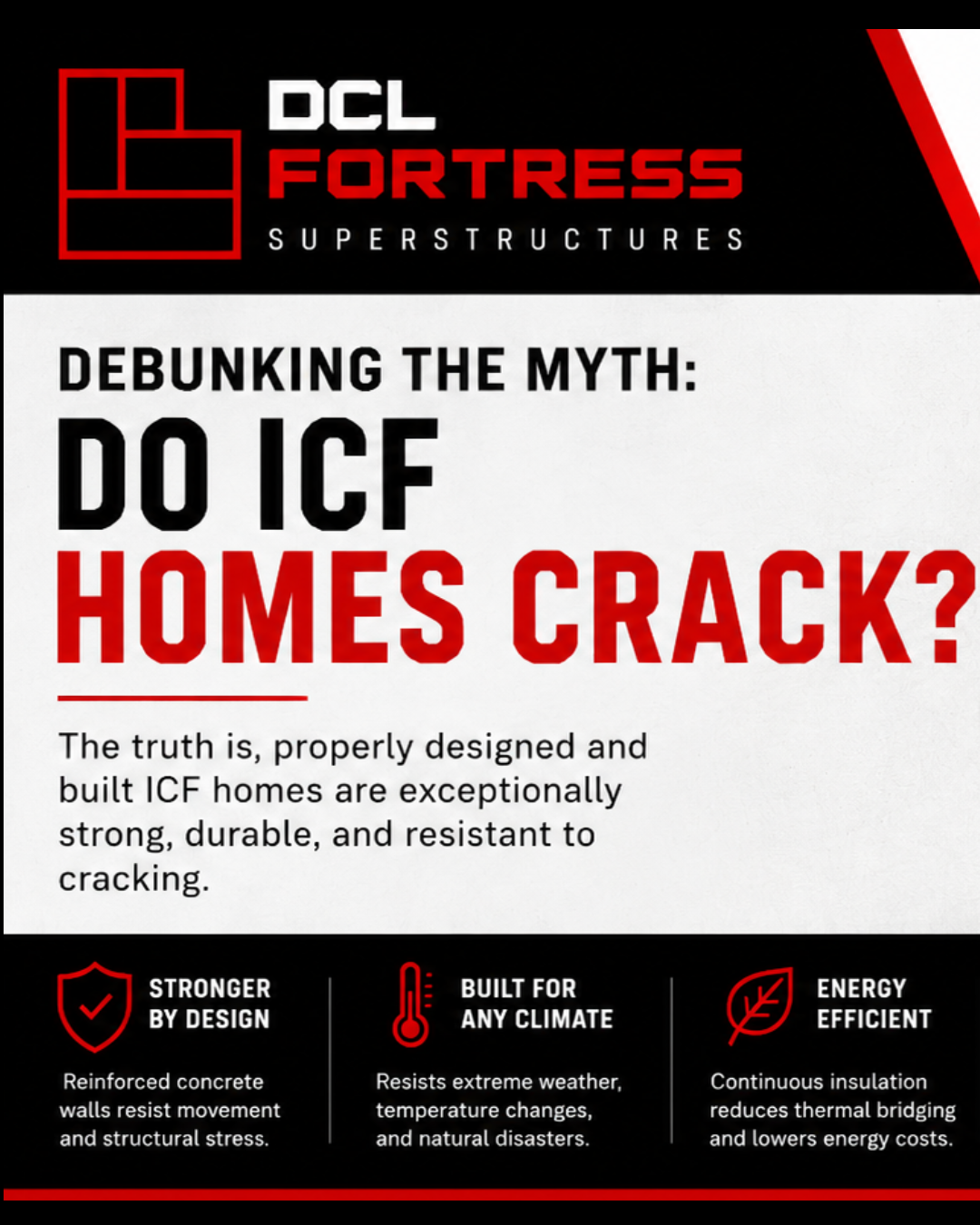
Do ICF homes crack? Learn what causes cracks in concrete, how ICF walls are built to resist them, and what homeowners and builders should know.
Why homeowners and developers choose ICF construction: storm resistance, energy savings, fire protection, quiet interiors and long-term durability.
How ICF construction supports sustainable architecture with energy-efficient, durable and eco-friendly buildings made from insulated concrete forms.
Understand the material costs of ICF construction and how insulated concrete forms can deliver long-term value for homeowners.
A guide to insulated concrete forms (ICF): how the blocks work and why builders choose them for strong, energy-efficient, durable buildings.
ICF construction suits homes, industrial buildings, agricultural structures and healthcare facilities. See where insulated concrete forms fit.
Contractors can stand out from competitors with SuperForm ICF systems. See how better products and resources give you an edge.
Why ICF systems suit multi-unit projects like apartments, retail centers and offices: design flexibility, ease of use and reliable results.
How ICF insulation, especially expanded polystyrene (EPS), delivers energy efficiency and structural integrity in green, disaster-resistant buildings.
Six strategies for designing disaster-resilient residential complexes, and how insulated concrete forms (ICF) support safety and performance.
The ICF construction system combines structural strength, energy efficiency, sound insulation and design flexibility for high-performance modern homes.
From single-family homes to apartment buildings, see how ICF construction brings efficiency, durability and design flexibility to residential projects.
ICF gives homes outstanding strength and resilience compared with traditional construction. See how insulated concrete forms improve home safety.
ICF vs wood-frame construction: compare strength, energy efficiency, durability and long-term value to see which fits your project.